




































The Global VAT/GST Compliance Gap: Why It’s Growing and why it Matters
Ketan Karia, Vice President, Analytics, EMEA
Economies worldwide are increasingly dependent on some form of consumption tax, but as the dependence has grown, so has the rate of non-compliance across the world. It is called the VAT compliance gap and it has become one of the most persistent and costly challenges facing tax administrations worldwide. Despite decades of reform, digitalisation, and policy tightening, many countries continue to lose billions in potential revenue every year. Understanding why this gap exists and why it is widening in some regions is essential for governments, businesses, and policymakers seeking sustainable solutions.
At its core, the compliance gap represents the difference between the VAT/GST revenue a country should collect in theory and what it actually collects. This gap is influenced by a mix of structural, behavioural, and technological factors. While some portion of the gap is due to legitimate business failures or administrative inefficiencies, a significant share stems from evasion, fraud, and under-reporting.
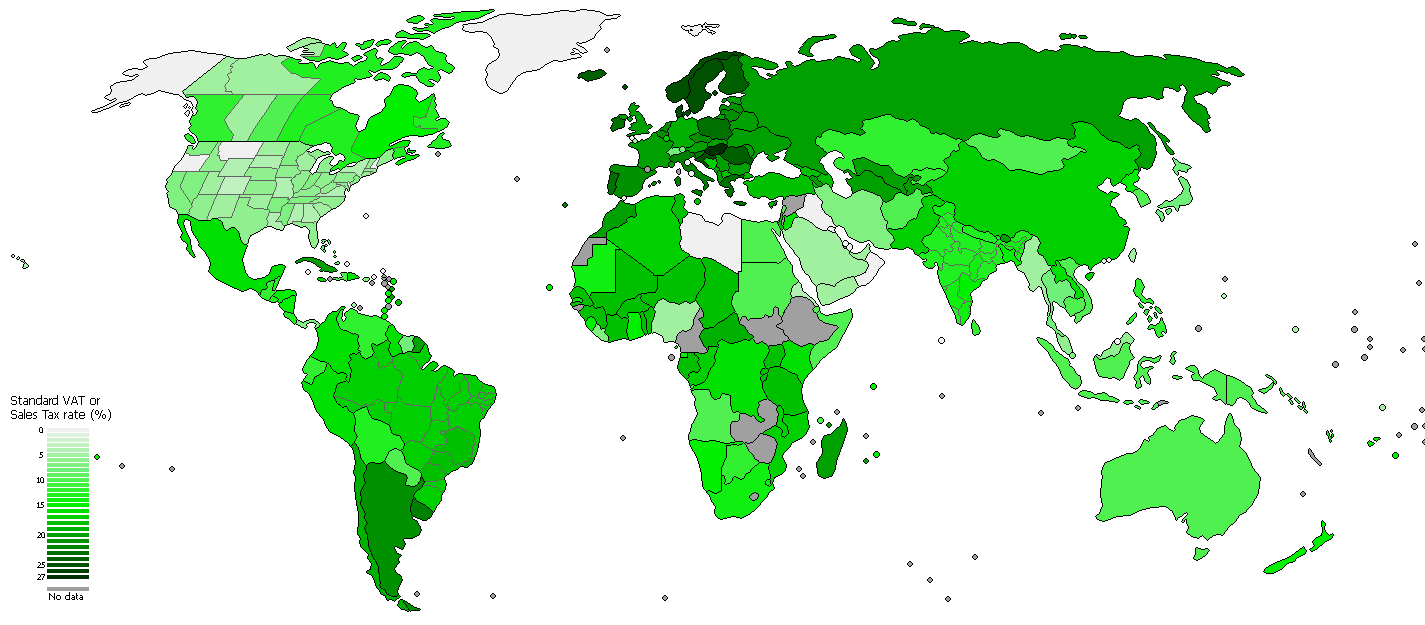
VAT Compliance Rate around the Globe (Data Source: Global VAT Compliance Rate)
One of the biggest drivers of the growing gap is the rapid expansion of the digital economy. Cross-border e-commerce, digital services, and platform-based business models like eBay and Amazon have created new complexities for tax authorities. Traditional VAT systems were designed for physical goods and domestic transactions, not for digital platforms operating across multiple jurisdictions. As a result, many tax administrations struggle to track, assess, and enforce compliance in this fast-moving environment.
Another major contributor is the size of the informal economy. In many developing countries, a large proportion of economic activity occurs outside formal regulatory systems. Cash-based transactions, unregistered businesses, and weak enforcement mechanisms make it difficult to capture VAT revenue effectively. Even in advanced economies, informal labour and small-scale trading continue to erode the tax base.
Administrative capacity also plays a significant role. Legacy IT systems, fragmented data, and manual processes limit the ability of tax authorities to detect non compliance in real time. Without integrated data analytics or automated reporting, authorities often rely on audits that are slow, resource intensive, and reactive rather than preventative.
Behavioural factors cannot be ignored either. Trust in government, perceptions of fairness, and the complexity of tax rules all influence voluntary compliance. When taxpayers view the system as overly burdensome or inconsistent, compliance naturally declines.
The good news is that many countries are making progress. Real-time reporting, e-invoicing, and continuous transaction controls (CTCs) have helped reduce the gap in regions like Latin America and parts of Europe. However, closing the compliance gap requires more than technology it demands a holistic approach that addresses behaviour, policy design, administrative capability, and dealing with non-compliance and evasion.
The VAT/GST compliance gap is not just a technical issue; it is a reflection of how well a tax system aligns with the realities of modern economies and how efficient the country is at addressing non-compliance or evasion.
As global trade evolves and digitisation accelerates and tax systems become more complex, countries must rethink how they measure, monitor, and enforce compliance without scaling sparse resources. Traditional administration and enforcement methods are no longer sufficient to administer growing trade volumes and prevent evasion. Automation and fraud detection technologies are the key. Modernisation of legacy systems and AI driven analytics are emerging as powerful tools that can transform how tax authorities scale their economies, identify risks, monitor compliance, and respond to emerging threats.
Only then can they build tax systems that are resilient, fair, and fit for the future.
Contact
Ready to close your VAT/GST compliance gap and boost revenue collection? Contact mLogica for a free assessment of your tax analytics needs.
Ketan Karia, Vice President, Analytics, EMEA
- Share on